Pages

Total Pageviews

Monday, October 2, 2017

Demi Lovato features in the October 2017 issue of Notion Magazine

Image result for Demi Lovato singing

One of her biggest hits was 2015's Confident.

Image result for Demi Lovato's Confident Album Cover

And Demi Lovato showed that she doesn't just sing it but she lives it.

Cover girl: She famously used her voice on social media to donate $250,000 toward Kesha's legal fees against Dr. Luke and then call out Taylor Swift for standing silent during the process

The 25-year-old singer showed off her fantastic figure as she flashed underboob and toned tummy in a cropped 'feminist' top in the October 2017 issue of Notion Magazine

Feminist: Demi Lovato showed off her fantastic figure as she flashed underboob and toned tummy in a cropped 'feminist' top in the October issue of Notion Magazine
Star power: The 25-year-old singer revealed that amid battling addictions and mental illnesses, she found herself as a role model

She also revealed that amid battling drug addictions and mental illnesses, she found herself as a role model.


Fergie(42)strips naked for Double Dutchess album

Fergie has been doing all she can to promote her first new album in 11 years, titled Double Dutchess.

And on Monday Oct 02,2017 it was stripping naked.

Nude girl: Fergie has been doing all she can to promote her first new album in 11 years, titled Double Duchess. And on Monday it was stripping naked

The 42-year-old looked to be in perfect shape as she was photographed with no clothes on as she stood in a studio for new images to go with her album which features song such as Hungry and Like It Ain't Nuttin'.

No clothes here! The 42-year-old looked to be in perfect shape as she was photographed with no clothes on as she stood in a studio for new images to go with her album which features song such as Hungry and Like It Ain't Nuttin'

2017 Las Vegas Shooting - 59 people Shot dead and 527 people injured Sunday Oct 01,2017


A crowd of more than 22,000 people were listening to country music star Jason Aldean at the Route 91 Harvest Festival when bursts of automatic gunfire erupted around 10:08 pm (0508 GMT)

Police said the lone shooter opened fire with multiple weapons on concert-goers from his 32nd floor room at the Mandalay Bay hotel-casino across the street on the famed Las Vegas Strip.

The sole suspect in the shooting, the 64-year-old Stephen Paddock killed himself in his hotel room as a police SWAT team was about to break in. 


TIMELINE OF TERROR IN VEGAS


Country music star Jason Aldean was performing on stage at the Route 91 Harvest Music Festival when lone gunman Stephen Paddock, 64, opened fire on the 22,000 people gathered.

About 10pm: Paddock smashes out two windows on the 32nd floor with a hammer-like implement and opens fire with his arsenal of at least 19 weapons - including fully automatic weapons.

10.08pm: First phone call to police that shots had been fired at the festival outside the Mandalay Bay Hotel and Casino on the Las Vegas Strip.

10.38pm: Police in Las Vegas say that they are 'investigating reports of an active shooter' near to the Mandalay Bay.

11.08pm: Las Vegas police confirm they have shut down a portion of The Strip

11.20pm: SWAT teams storm the 32nd floor room that Stephen Paddock was firing from. They gained entry using flashbangs designed to stun the shooter. Officers entered the room and found he had taken his own life. Seventy-two minutes elapsed from the first 911 call to Paddock being found dead.

11.20pm: Hundreds of people began being transported to hospitals in Las Vegas

11.32pm: McCarran International Airport announced it was diverting flights destined for the city.

11.34pm: Interstate 15 in and out of Las Vegas was shut down for a time.

11.56pm: Hospitals in Las Vegas said that at least two people were dead and 24 were injured of which 12 were critical.

12.01am: Almost two hours after the first emergency call police confirmed that one suspect was 'down'.

1.06am: The Southern California police department say that one of their officers is among the injured.

1.34am: At this point the death toll dramatic rises to 20 people injured and 100 injured.

1.54am: Police in Las Vegas says that two of their officers who were off-duty were among the dead.

2.13am: Investigators say that they are looking for the 'roommate' of the shooter - Marilou Danley and describe her as a person of interest.

3.30am: Las Vegas Sheriff Joseph Lombardo announces that the death toll is now at least 50 dead and 200 injured - making this the deadliest shooting in US history

6.30am: Investigators say they have located Marilou Danley and say that she is overseas and is not longer a person of interest.

9.30am: Sheriff provides another update and says that the death toll is now in excess of 59 and that 527 people are injured.


The first shooting victims have been identified after 59 people were killed when a gunman opened fire at a music festival in Las Vegas on Sunday Oct 01,2017in what has become the deadliest mass shooting in American history.


Sonny Melton, 29, Denise Salmon Burditus, 50, Lisa Romero, Jordan McIldoon, 23, Jessica Klymchuk, 28, Jenny Parks, Susan Smith, 53, Adrian Murfitt, 35, John Phippen, Rhonda LeRocque, Dana Gardner, Quinton Robbins, 20, and Bailey Schweitzer, all lost their lives when 64-year-old Stephen Craig Paddock of nearby Mesquite, Nevada began shooting from his hotel room across the street at the Mandalay Bay Casino.

Another 515 people were injured in what is now the deadliest mass shooting in U.S. history


The man who shot dead 59 people and injured 527 others in Las Vegas on Sunday night Oct 01,2017was a multimillionaire who took a huge arsenal of 23 guns into his Mandalay Bay hotel 
room, which he transformed into an elaborate sniper's nest before opening fire on a country music festival on Monday.

Stephen Paddock, 64, had made millions from real estate deals, according to his brother; he also owned two planes and several properties across the US, and seemed normal apart from his passion for gambling large sums. 

But he'd also secretly amassed a massive arsenal of 42 firearms. At least one of those was automatic, while another two had been modified with a legal bump-stock devices that allows semi-automatic guns to give full-auto fire of up to 800 rounds a minute. Several had scopes.

He took 23 of those guns into his Mandalay Bay suite over several days and set up two rifles on tripods at windows overlooking the Route 91 Harvest country music festival.

Thousands of rounds of ammunition were also found in the suite, enabling him to fire repeatedly over the course of 72 minutes. His car had traces of a fertilizer used in bomb-making.

Paddock had lived in 27 residences in Nevada, Florida and Texas as an adult, but other than that he had apparently lived a quiet and unremarkable life - and the reason for his assault remains a mystery

Deadliest mass shootings in the US 

Mandalay Bay, Las Vegas (2017): At least 58 killed

  • Shooter Stephen Paddock opened fire on the crowd of concert-goers at a country music festival at the Mandalay Bay Resort and Casino, killing more than 58 people and injuring 500 others. 

Pulse nightclub (2016): 49 killed 

  • A heavily armed gunman killed 49 people inside a gay nightclub in the city of Orlando on June 12, 2016.
  • The attacker, US citizen Omar Mateen, was killed in a gun battle with police. He had pledged allegiance to the Islamic State of Iraq and the Levant (ISIL) group, which later claimed responsibility for the attack. 

Virginia Tech (2007): 32 killed

  • A 23-year-old student, South Korean national Seung-Hui Cho, went on a rampage at Virginia Tech University in April 2007, killing 27 students and five teachers before committing suicide.

Sandy Hook (2012): 26 killed

  • A 20-year-old American citizen, Adam Lanza, killed his mother in December 2012 before shooting and killing 20 children and six adults at Sandy Hook Elementary School in Newtown, Connecticut. He later committed suicide. 

Texas restaurant (1991): 22 killed

  • In October 1991, 35-year-old George Hennard, a US citizen, shot dead 22 people in a restaurant in the town of Killeen before shooting himself.

San Bernardino (2015): 14 killed

  • A newlywed couple - US citizen Rizwan Farook and his Pakistani wife Tashfeen Malik, who was a permanent resident - stormed an office party at a social services centre in San Bernardino, California in December 2015, killing 14 people and injuring 22 others. The couple was shot dead by police.

Fort Hood military base (2009): 13 killed

In November 2009, US Army psychiatrist Nidal Hasan opened fire at his military base in Killeen, killing 13 people and injuring 42 others. 

New York immigrant centre: 13 killed

  • A Vietnamese immigrant, Jiverly Antares Wong, shot and killed 13 people at a civic centre in the city of Binghamton in April 2009, before killing himself.

Navy Yard headquarters (2013): 12 killed

  • Former serviceman Aaron Alexis, a US citizen, shot randomly at workers at the Washington Navy Yard headquarters in September 2013, killing 12 people before he was shot dead by police.

Aurora, Colorado (2012): 12 killed

  • James Holmes, a US citizen born in California, wearing body armour stormed a cinema showing a late-night premiere of a Batman film in Aurora, Colorado in July 2012, opening fire and releasing tear gas. Twelve people were killed and 70 others wounded. Holmes was sentenced to life in prison.

Columbine High (1999): 12 killed

  • Two American teenage boys - Eric Harris and Dylan Klebold - shot and killed 12 classmates and a teacher, before killing themselves at Columbine High School in Littleton, Colorado, in April 1999.

Nobel Prizes - All you need to know


From 1901 till this year, Nobel prizes have been awarded 579 times to 911 Laureates and organisations with the youngest winner being 2014 Peace Prize awardee Malala Yousafzai of Pakistan at 17 years.

By winning the Peace Nobel at this tender age along with India’s Kailash Satyarthi, Ms. Yousafzai beat the previous record of Lawrence Bragg, who won the Physics Nobel in 1915 at the age of 25.

The word “Laureate” signifies the laurel wreath awarded to winners of athletic competitions and poetic meets in Ancient Greece. In Greek mythology, god Apollo is represented wearing on his head a laurel wreath, a circular crown made of branches and leaves of the bay laurel.

The statutes of the Nobel Foundation say, “If none of the works under consideration is found to be of the importance indicated in the first paragraph, the prize money shall be reserved until the following year.”

“If, even then, the prize cannot be awarded, the amount shall be added to the Foundation’s restricted funds.”

On 27 November 1895, Alfred Nobel signed his last will and testament, giving the largest share of his fortune to a series of prizes in Physics, Chemistry,Physiology or Medicine, Literature and Peace.

In 1968, Sweden’s central bank Sveriges Riksbank established The Sveriges Riksbank Prize in Economic Sciences in memory of Nobel.

At the Nobel Award ceremonies on December 10, the Laureates receive three things: a Nobel Diploma, a Nobel Medal and a document confirming the Nobel Prize amount.

Each Nobel Diploma is a unique work of art, created by foremost Swedish and Norwegian artists and calligraphers.

The Nobel Medals are handmade with careful precision and in 18 carat green gold plated with 24 carat gold.

The Nobel Prize amount for 2014 is set at Swedish kronor (SEK) 8.0 million per full Nobel Prize.

The average age of all Nobel Laureates in all prize categories between 1901 and 2014 is 59 years.
Most common birthday month of all the Nobel Laureates is June.

Since 1901, prizes have not been awarded 49 times, most of them during World War I (1914-1918) and II (1939-1945).

Leonid Hurwicz has the distinction of being the oldest Nobel recipient at the age of 90 for Economics in 2007.

Till now, 48 women have won the Nobel while two Laureates declined the prize.

Jean-Paul Sartre, awarded the 1964 Nobel Prize in Literature, declined it as he had consistently declined all official honours.

Le Duc Tho, awarded the 1973 Nobel Peace Prize jointly with U.S. Secretary of State Henry Kissinger for negotiating the Vietnam peace accord, said he was not in a position to accept the award, citing the situation in Vietnam as his reason.

Four Laureates were forced by authorities to decline the Nobel.

Adolf Hitler forbade three Germans Richard Kuhn, Adolf Butenandt and Gerhard Domagk, from accepting the Nobel Prize. They, however, received the Nobel Prize Diploma and Medal later but not the prize amount.

Boris Pasternak, the 1958 Nobel Laureate in Literature, initially accepted the Prize but was later coerced by authorities of his native country the Soviet Union to decline the award.

Three Peace Laureates — Germany’s Carl von Ossietzky, Myanmar’s pro-democracy icon Aung San Suu Kyi and Chinese rights activist Liu Xiaobo — were under arrest at the time of the award.

The International Committee of the Red Cross (ICRC) was given the Nobel Peace Prize thrice while its founder Henry Dunant won the first Peace Prize in 1901.

Linus Pauling has the distinction of being the only person to have been awarded two unshared Nobel Prizes — the 1954 Prize in Chemistry and the 1962 Peace Prize.

Since 1901, when Nobel Prizes were first given, Peace Prize has been awarded by a committee of five, appointed by the Norwegian Parliament Storting in accordance with Alfred Nobel’s will.

Alfred Nobel never disclosed why he didn’t give the task of awarding the Peace Prize to a Swedish body.
The reasons are speculative.

One argument is that Nobel admired Norwegian patriot and leading author Bjornstjerne Bjornson while another is that the Storting was the first national legislature to vote in support for the international peace movement.

Nobel may also have favoured distribution of the tasks related to the Nobel Prizes within the Swedish-Norwegian union or he may have feared that given the highly political nature of the Peace Prize, it might become a tool in power politics thus reducing its significance as an instrument for peace.

“It is my express wish that in awarding the prizes no consideration be given to the nationality of the candidates, but that the most worthy shall receive the prize, whether he be Scandinavian or not,” Nobel wrote in his will.

During the 20th century, 8 Scandinavians have won the Peace Prize — 5 Swedes, 2 Norwegians and one Dane.

In the nomination and selection process, the committee has the assistance of a secretary and since the establishment of the Norwegian Nobel Institute in 1904, this person is also the institute’s director.

There have been several criticism and protests against decisions of the Norwegian Nobel Committee since 1901.

The selection process

The Peace Prize award ceremony on December 10 is the culmination of a long selection process.
According to rules, there can be a maximum of three Laureates in a category every year.

The Norwegian Nobel Committee begins the whole process by inviting nominations which can be submitted by February 1 each year.

Who are entitled to nominate candidates for the Nobel Peace Prize?

Present and past members of the Nobel Committee and advisers at the Nobel Institute; members of national assemblies and governments, and members of the Inter-Parliamentary Union; members of the Permanent Court of Arbitration and the International Court of Justice at the Hague and members of the Commission of the Permanent International Peace Bureau.

Besides them, members of the Institut de Droit International and present university professors of law, political science, history and philosophy; and holders of the Nobel Peace Prize can also nominate.

After reviewing their qualifications, a shortlist of the candidates is made.

The announcement of the Laureate’s name is often made on a Friday in mid-October at the Nobel Institute building and the award is presented annually on December 10, the day Alfred Nobel died in 1896

2017 Catalonia Independence Referendum - ‘Yes’ side wins Catalonia independence vote

Catalonia’s regional government declared a landslide win for the “yes” side in a disputed referendum on independence from Spain that degenerated into ugly scenes of mayhem on Sunday Oct 01,2017, with more than 800 people injured as riot police attacked peaceful protesters and unarmed civilians gathered to cast their ballots.

Catalonia has “won the right to become an independent state,” Catalan president Carles Puigdemont said after the polls closed, adding that he would keep his pledge to declare independence unilaterally from Spain if the “yes” side wins.

“Today the Spanish state wrote another shameful page in its history with Catalonia,” Puigdemont added, saying he would appeal to the European Union to look into alleged human rights violations during the vote.

Catalan regional government spokesman Jordi Turull told early Monday Oct 02,2017 that 90 % of the 2.26 million Catalans who voted chose the “yes” side in favor of independence.

He said nearly 8 % of voters rejected independence and the rest of the ballots were blank or void.

He said 15,000 votes were still being counted.

The region has 5.3 million registered voters, and Turull said the number of ballots didn’t include those confiscated by Spanish police during violent raids that aimed to stop the vote.

Note

Catalans favoring a break with Spain have long wanted more than the limited autonomy they now enjoy, arguing that they contribute far more than they receive from the central government, which controls key areas including taxes and infrastructure.

Austria Enforces Burqa Ban Sunday Oct 01,2017

Muslim women in Austria were forced by the police to remove their facial coverings on Sunday Oct 01,2017, as an anti-burqa law came into effect.

The 'burqa ban' prohibits facial coverings including niqabs and burqas, and also places restrictions on surgical masks, ski masks and clown make-up worn in public.

Yesterday, a woman wearing a niqab facial veil, which only leaves the eyes uncovered, was seen being told to remove her veil by two police officers in Zell am See, a city south of Saltzburg.
Those who defy the ban could face a fine of €150 (£132).

While the rule applies to some non-religious facial coverings, it is generically perceived to be directed at the extremely modest clothes worn by a minority of Muslim women.

The measures, similar to those in other European Union countries such as France, also apply to visitors

Jagmeet Singh becomes first Sikh to lead major political party in Canada Monday Oct 02,2017

A 38-year-old Sikh lawyer was on Monday Oct 02,2017 elected the leader of Canada's New Democratic Party, becoming the first non-white politician to head a major political party in the country.

Jagmeet Singh, the Ontario provincial lawmaker, was elected on the first ballot to lead the party into the 2019 election against Prime Minister Justin Trudeau?s Liberals.

Jagmeet Singh won the decisive first-ballot victory over three other candidates by receiving 53.6 per cent of the vote.
"Thank you, New Democrats. The run for Prime Minister begins now," he tweeted after the victory.
"That's why today, I'm officially launching my campaign to be the next Prime Minister of Canada," he added.

Jagmeet Singh, who has penchant for colourful turbans, is the first member of a minority community to lead a major federal political party.

He now has the difficult task of rebuilding the party that lost 59 seats in the 2015 election.

"This race has renewed excitement in our party," Singh said, calling the win an "incredibly profound honour".
The New Democratic Party is currently at the third place in Canada's Parliament, with 44 of 338 seats. The party has never held power.

In the 2011 general election, the party made historic gains only to lose almost a million votes - mostly to Trudeau's Liberals - four years later.

Jagmeet Singh said he would focus on issues of climate change, reconciliation with indigenous peoples, and electoral reform

Aviation Turbine Fuel (ATF) Price Hike by 6 % Sunday Oct 01,2017

Domestic airlines are likely to increase ticket fares in the coming weeks after the price of jet fuel or aviation turbine fuel (ATF) was hiked on Sunday Oct 01,2017 by a steep 6 %

This was done citing firming of international rates.

The recent increase in the price of ATF is the third straight increase since August, the last being 4 per cent on September 1, thus adding to the economic burden on airlines.


According to a notification released by India Oil Corporation, ATF will now cost Rs 53,045 per kilolitre (kl) in Delhi, Rs 3,025 per kl more than Rs 50,020 previously.

ATF accounts for 50% of an airlines operational expenditure.

The hike in rates will also cut into the profit margins of carriers

2017 Bangladesh Tour of South Africa - South Africa Vs Bangladesh First Test @ Senwes Park in Potchefstroom - South Africa beat Bangladesh by 333 Runs Monday Oct 02,2017


South Africa beat Bangladesh by 333 Runs
First Test @ Senwes Park in Potchefstroom Sep 28 - Oct 02,2017
Scorecard
South Africa 496/3 Declared and 247/6 Declared
Bangladesh  320 and 90
Match Result - South Africa won by 333 Runs
MOM - Dean Elgar(South Africa) for his 199 Runs in the 1st Innings
Series Result - South Africa lead the 2-Match Test Series 1-0


The pace of Kagiso Rabada and the spin of Keshav Maharaj sent Bangladesh crashing to a 333-run defeat on the fifth day of the first Test against South Africa at Senwes Park on Monday Oct 02,2017

Bangladesh lost seven wickets for 41 runs in less than an hour and a half as they were bowled out for 90 after being set 424 to win.

South Africa's victory was overshadowed by an injury to fast bowler Morne Morkel, who is expected to be out for six weeks.

Rabada started the destruction by taking the first three wickets of the morning. He finished with three for 33, while left-arm spinner Maharaj took four for 25.

Resuming on 49 for three, Bangladesh lost their captain, Mushfiqur Rahim, to the 12th ball of the morning when he pushed at a lifting delivery from Rabada and was well caught above his head by Hashim Amla at first slip for 16.

Mahmudullah was bowled off an inside edge when he played a tentative defensive shot against the fast bowler and Liton Das offered no shot and was leg before wicket to a ball which slanted in to him.

Sabbir Rahman and Taskin Ahmed were both leg before to Maharaj before Shafiul Islam was run out when he and Mehedy Hasan attempted a third run against the strong fielding arm of Rabada after a relay throw from twelfthman Wayne Parnell, who chased a ball to long-off.

Hasan and last batsman Mustafizur Rahman shared the best partnership of the morning, putting on 15 before Mustafizur pushed back a return catch to Maharaj.

Bangladesh's rapid demise meant that South Africa were hardly hampered by the absence of Morkel, who suffered a side strain after taking the first two wickets on Sunday.

Team manager Mohammed Moosajee said Morkel required around six weeks rest, ruling him out of the second Test in Bloemfontein, starting on Friday.

South Africa dominated the match after Rahm's surprising decision to send them in to bat on an easy-paced pitch, with Dean Elgar (199), new cap Aiden Markram (97) and Hashim Amla (137) enabling them to score 496 for three declared in the first innings.

2017 Pakistan and Sri Lanka in UAE, 2 -Match Test Series - Sri Lanka's Rangana Herath Becomes 4th Fastest Bowler to Take 400 Test Wickets Monday Oct 02,2017

Rangana Herath on Monday Oct 02,2017 became the first left-arm spinner in the history of Test cricket to take 400 wickets as he dismissed paceman Mohammad Abbas to guide Sri Lanka to a miracle win against Pakistan in the 1st Test at Abu Dhabi.


Herath, who came into this Test match with 389 wickets to his name, picked up a five-wicket haul in the first innings and followed that up with a six-wicket haul in the second innings.

His eleven wickets helped Sri Lanka defend a fourth innings total of 135 runs, the lowest total successfully defended by the Lankans ever in cricket's shortest format.

Herath's heroics also ensured that this was also the lowest fourth innings total that Pakistan had failed to chase down. Herath now has 400 wickets to his name from 84 Test matches.

The Sri Lankan tweaker is the fourth fastest to the mark, beating the likes of Anil Kumble (85 Tests), Glenn McGrath (87 Tests) and Shane Warne (92 Tests).

His compatriot Muttiah Muralithran remains the fastest bowler to pick up 400 wickets, a feat he achieved in just 72 matches.

He is followed by Kiwi legend Richard Hadlee and South African speed gun Dale Steyn, who both reached the milestone in 80 Test matches.

Herath has now picked up 10 wickets in a match on nine occasions and also has 33 five-wicket hauls. 

UK's Monarch Airlines Ceases Operations, Flights Cancelled Monday Oct 02,2017

UK's Civil Aviation Authority (CAA) said on Monday Oct 02,2017 Britain's Monarch Airlines ceased operations with immediate effect, leaving 110,000 customers stranded overseas and about 300,000 future bookings cancelled.

"We're sorry to announce that Monarch has suspended flights and holidays," Monarch said on Twitter.


Tough competition in the airlines sector has been putting pressure on weaker European carriers and driving consolidation, with Air Berlin and Alitalia filing for insolvency this year and seeking new investors for parts of their business.

"This is the UK's largest ever airline to enter administration," CAA said.

The government has asked CAA to charter more than 30 aircraft to bring back to the UK Monarch Airlines customers currently overseas, CAA said in a statement.

The government has begun the biggest ever peacetime repatriation effort to return the affected passengers, Department for Transport, Foreign and Commonwealth Office said in a statement.

Monarch said on Thursday it was talking to potential partners after a report that parts of its short-haul network would be sold.

2017 Nobel Prize in Medicine - 3 American Scientists Win Nobel in Medicine For Decoding Body Clock Monday Oct 02,2017


US-born scientists Jeffrey Hall, Michael Rosbash and Michael Young won the 2017 Nobel Prize for Medicine for their discoveries of molecular mechanisms controlling our biological clocks, the award-giving body said on Monday Oct 02,2017


The mechanisms help explain issues such as why people travelling long distances over several time zones often suffer jet lag and they have wider implications for health such as increased risk for certain diseases.


"(The three scientists') discoveries explain how plants, animals and humans adapt their biological rhythm so that it is synchronized with the Earth's revolutions," the Nobel Assembly at Sweden's Karolinska Institute said in a statement.

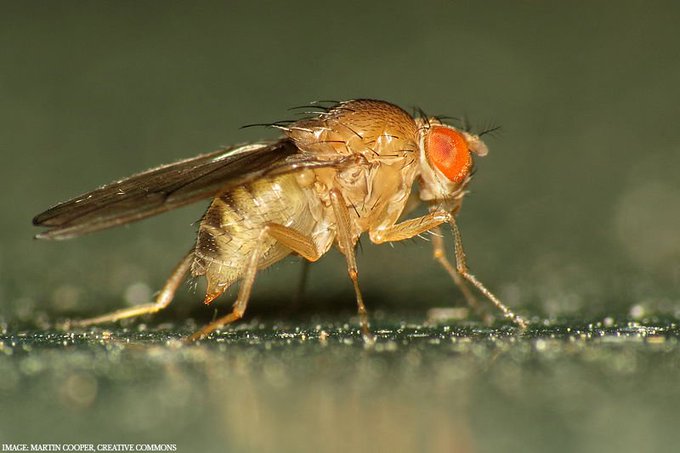
The laureates used fruit flies to isolate a gene that controls the normal daily biological rhythm and showed how this gene encoded a protein that accumulates in the cell during the night and degrades during the day.

"The clock regulates critical functions such as behavior, hormone levels, sleep, body temperature and metabolism," the Assembly said on awarding the prize of 9 million Swedish crowns ($1.1 million).

Thomas Perlmann, secretary at the Karolinska Institute Nobel Committee, described the reaction of Rosbash when first informed of the award: "He was silent and then he said ‘you are kidding me’."

Medicine is the first of the Nobel Prizes awarded each year. The prizes for achievements in science, literature and peace were created in accordance with the will of dynamite inventor and businessman Alfred Nobel and have been awarded since 1901.

Nobel medicine laureates have included scientific greats such as Alexander Fleming, the discoverer of penicillin, and Karl Landsteiner, whose identification of separate blood types opened the way to carrying out safe transfusions.

The prize has not been without controversy, especially with the benefit of hindsight, such as with 1948 award for the discovery of DDT, a chemical that helped battle epidemics but was later banned due to its harmful environmental impact

The body clock so precisely controls our body to match day and night that disrupting it can have profound implications.
The ghastly experience of jet lag is caused by the body being out of sync with the world around it.
In the short term, body clock disruption affects memory formation, but in the long term it increases the risk of diseases, including type 2 diabetes, cancer and heart disease.

The Nobel Prize in Medicine for 2017 has been awarded to Jeffrey C Hall, Michael Rosbash and Michael W Young for their discoveries about the body’s daily rhythm, or circadian rhythms


nobel prize 2017, nobel prize for medicine 2017, winner of nobel prize in medicine 2017, Jeffrey C Hall, Michael Rosbash, Michael W Young, biological clock, indian express, indian express news

The American trio were recognised by the Nobel committee for being able to peek inside the ‘body’s biological clock’ and discover “how plants, animals and humans adapt their biological rhythm so that it is synchronised with the Earth’s revolutions.” Through their research they showed that the particular gene “encodes a protein that accumulates in the cell during the night, and is then degraded during the day”.
The citation for the 9-million-kronor ($1.1 million) prize says that the researchers used fruit flies as a model organism and “isolated a gene that controls the normal daily biological rhythm”.

What is circardian rhythm?

Circadian rhythms, colloquially known as our biological clock, are the ways in which the body keeps tabs on the passing of a day, thus, affecting sleep, hormone levels, behaviour, metabolism and even body temperature. These rhythms show why disturbance in a particular pattern – such as lack of sleep due to jet lag or insomnia – could potentially have devastating consequences on the body and result in increased risk of many diseases.
This is particularly relevant after a leading sleep scientist claimed that lack of sleep is slowly killing us.

What have the researchers identified?

According to the Nobel committee’s citation, the researchers looked into the inner workings of the circardian rhythms and discovered that all kinds of life – plants and humans alike – regulate their biological clock with the help of the sun using ‘special technologies’ in the body. Using fruit flies, they isolated the gene that controls the normal daily biological rhythm”.
Consequently additional protein components of this machinery were also identified by them that, in turn, revealed the mechanism that governs “the self-sustaining clockwork inside the cell”. By using the same principles, the biological clocks of other multicellular organisms like human beings can also be identified. The discrepancy between this biological clock and external surroundings can adversely affect the well being of an organism. According to a report in The Guardian, the discovery of different genes and proteins by the team has aided the explanation of the workings of the self-regulating mechanism as well as the way light can synchronise the clock.


Using fruit flies as a model organism, this year’s Nobel Laureates isolated a gene that controls the daily biological rhythm.

Robash is on the faculty at Brandeis University, Young at Rockefeller University and Hall is at the University of Maine. The prize was announced at the Nobel Forum at the Karolinska Institute in Stockholm, Sweden. The winners have raised “awareness of the importance of a proper sleep hygiene,” Juleen Zierath of the Nobel Academy said.

Previous Winners Of Nobel Prize in Medicine

2016 - Yoshinori Ohsumi for discovering how cells remain healthy by recycling waste.
2015 - William C Campbell, Satoshi Ōmura and Youyou Tu for anti-parasite drug discoveries.
2014 - John O'Keefe, May-Britt Moser and Edvard Moser for discovering the brain's navigating system.
2013 - James Rothman, Randy Schekman, and Thomas Sudhof for their discovery of how cells precisely transport material.
2012 - Two pioneers of stem cell research - John Gurdon and Shinya Yamanaka - were awarded the Nobel after changing adult cells into stem cells.
2011 - Bruce Beutler, Jules Hoffmann and Ralph Steinman shared the prize after revolutionising the understanding of how the body fights infection.
2010 - Robert Edwards for devising the fertility treatment IVF which led to the first "test tube baby" in July 1978.

Nobel Prizes - All you need to know


From 1901 till this year, Nobel prizes have been awarded 579 times to 911 Laureates and organisations with the youngest winner being 2014 Peace Prize awardee Malala Yousafzai of Pakistan at 17 years.

By winning the Peace Nobel at this tender age along with India’s Kailash Satyarthi, Ms. Yousafzai beat the previous record of Lawrence Bragg, who won the Physics Nobel in 1915 at the age of 25.

The word “Laureate” signifies the laurel wreath awarded to winners of athletic competitions and poetic meets in Ancient Greece. In Greek mythology, god Apollo is represented wearing on his head a laurel wreath, a circular crown made of branches and leaves of the bay laurel.

The statutes of the Nobel Foundation say, “If none of the works under consideration is found to be of the importance indicated in the first paragraph, the prize money shall be reserved until the following year.”

“If, even then, the prize cannot be awarded, the amount shall be added to the Foundation’s restricted funds.”

On 27 November 1895, Alfred Nobel signed his last will and testament, giving the largest share of his fortune to a series of prizes in Physics, Chemistry,Physiology or Medicine, Literature and Peace.

In 1968, Sweden’s central bank Sveriges Riksbank established The Sveriges Riksbank Prize in Economic Sciences in memory of Nobel.

At the Nobel Award ceremonies on December 10, the Laureates receive three things: a Nobel Diploma, a Nobel Medal and a document confirming the Nobel Prize amount.

Each Nobel Diploma is a unique work of art, created by foremost Swedish and Norwegian artists and calligraphers.

The Nobel Medals are handmade with careful precision and in 18 carat green gold plated with 24 carat gold.

The Nobel Prize amount for 2014 is set at Swedish kronor (SEK) 8.0 million per full Nobel Prize.

The average age of all Nobel Laureates in all prize categories between 1901 and 2014 is 59 years.
Most common birthday month of all the Nobel Laureates is June.

Since 1901, prizes have not been awarded 49 times, most of them during World War I (1914-1918) and II (1939-1945).

Leonid Hurwicz has the distinction of being the oldest Nobel recipient at the age of 90 for Economics in 2007.

Till now, 48 women have won the Nobel while two Laureates declined the prize.

Jean-Paul Sartre, awarded the 1964 Nobel Prize in Literature, declined it as he had consistently declined all official honours.

Le Duc Tho, awarded the 1973 Nobel Peace Prize jointly with U.S. Secretary of State Henry Kissinger for negotiating the Vietnam peace accord, said he was not in a position to accept the award, citing the situation in Vietnam as his reason.

Four Laureates were forced by authorities to decline the Nobel.

Adolf Hitler forbade three Germans Richard Kuhn, Adolf Butenandt and Gerhard Domagk, from accepting the Nobel Prize. They, however, received the Nobel Prize Diploma and Medal later but not the prize amount.

Boris Pasternak, the 1958 Nobel Laureate in Literature, initially accepted the Prize but was later coerced by authorities of his native country the Soviet Union to decline the award.

Three Peace Laureates — Germany’s Carl von Ossietzky, Myanmar’s pro-democracy icon Aung San Suu Kyi and Chinese rights activist Liu Xiaobo — were under arrest at the time of the award.

The International Committee of the Red Cross (ICRC) was given the Nobel Peace Prize thrice while its founder Henry Dunant won the first Peace Prize in 1901.

Linus Pauling has the distinction of being the only person to have been awarded two unshared Nobel Prizes — the 1954 Prize in Chemistry and the 1962 Peace Prize.

Since 1901, when Nobel Prizes were first given, Peace Prize has been awarded by a committee of five, appointed by the Norwegian Parliament Storting in accordance with Alfred Nobel’s will.

Alfred Nobel never disclosed why he didn’t give the task of awarding the Peace Prize to a Swedish body.
The reasons are speculative.

One argument is that Nobel admired Norwegian patriot and leading author Bjornstjerne Bjornson while another is that the Storting was the first national legislature to vote in support for the international peace movement.

Nobel may also have favoured distribution of the tasks related to the Nobel Prizes within the Swedish-Norwegian union or he may have feared that given the highly political nature of the Peace Prize, it might become a tool in power politics thus reducing its significance as an instrument for peace.

“It is my express wish that in awarding the prizes no consideration be given to the nationality of the candidates, but that the most worthy shall receive the prize, whether he be Scandinavian or not,” Nobel wrote in his will.

During the 20th century, 8 Scandinavians have won the Peace Prize — 5 Swedes, 2 Norwegians and one Dane.

In the nomination and selection process, the committee has the assistance of a secretary and since the establishment of the Norwegian Nobel Institute in 1904, this person is also the institute’s director.

There have been several criticism and protests against decisions of the Norwegian Nobel Committee since 1901.

The selection process

The Peace Prize award ceremony on December 10 is the culmination of a long selection process.
According to rules, there can be a maximum of three Laureates in a category every year.

The Norwegian Nobel Committee begins the whole process by inviting nominations which can be submitted by February 1 each year.

Who are entitled to nominate candidates for the Nobel Peace Prize?

Present and past members of the Nobel Committee and advisers at the Nobel Institute; members of national assemblies and governments, and members of the Inter-Parliamentary Union; members of the Permanent Court of Arbitration and the International Court of Justice at the Hague and members of the Commission of the Permanent International Peace Bureau.

Besides them, members of the Institut de Droit International and present university professors of law, political science, history and philosophy; and holders of the Nobel Peace Prize can also nominate.

After reviewing their qualifications, a shortlist of the candidates is made.

The announcement of the Laureate’s name is often made on a Friday in mid-October at the Nobel Institute building and the award is presented annually on December 10, the day Alfred Nobel died in 1896


Rohit Sharma Goes Past Virat Kohli; Sachin Tendulkar Sits on Top With 9 100s Against Australia Sunday Oct 01,2017

There is something about the ruthless Australians that brings out the best from the Indian players and while the likes of Sachin Tendulkar and VVS Laxman have always upped their game against the Aussies, the latest Indian player who seems to have taken a liking for the Australians is Rohit Sharma. While Rohit has scored 14 ODI centuries in his career, 6 of them have come against the Australians — the lates coming in Nagpur on Sunday.


With Sunday’s century, Rohit crossed India skipper Virat Kohli and now stands behind little genius Tendulkar. While Kohli has 5 centuries against the Aussies, Tendulkar has the maximum 100s against them with 9 centuries to his name. Rohit sits equal with West Indies great Desmond Haynes while Laxman sits fourth on the list with 4 ODI 100s against the mighty Australians.

Interestingly, Rohit has the best average against the Aussies with an impressive average of 66.37. Even though Rohit sits on 6 centuries with Haynes, it took the latter 64 matches to score the centuries while Rohit has scored them in just 28 games.

Rohit’s record against the Aussies reads 1593 runs in 28 games at an average of 66.37 with 6 hundreds, 5 fifties and a double hundred. His highest score stands at 209, scored in Bengaluru. Rohit’s strike-rate against them sits at 97.73 and the Mumbai batsman has hit 128 boundaries and 58 sixes